Split vs Whole Elk Antler Dog Chews REVIEWED - Deluxe
As an Amazon Associate we earn from qualifying purchases, at no extra cost to you.
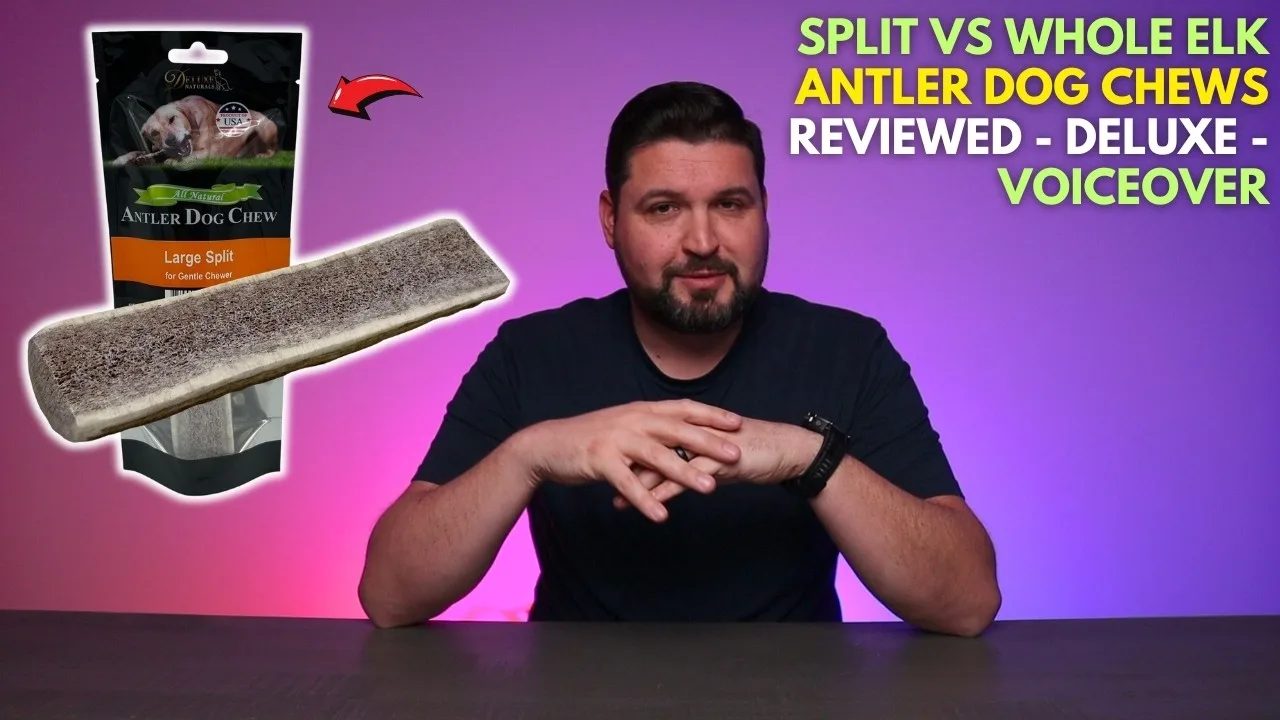
Deluxe Naturals elk antler dog chews come in two versions reviewed by CommQuest: a split antler for lighter chewers and a whole antler for aggressive ones. Both are USA-sourced, naturally shed, and free of rawhide and preservatives. The whole antler is the better buy for heavy chewers.
Two Antlers, Two Very Different Jobs
The split and whole versions look similar at a glance, but they behave completely differently once a dog gets hold of them. The split antler is cut right down the middle, so the marrow is exposed from the first bite. No wrestling, no frustration. That immediacy makes it the right choice for teething puppies, smaller dogs, or any dog that chews lightly. It runs six to seven and a half inches and is sized for dogs under 45 pounds.
The whole antler is a different animal. The outer surface is harder, the marrow is locked inside, and that’s the entire point. It runs six to nine inches and targets dogs in the 30 to 80 pound range. Because your dog has to actually work to get to the good stuff, it lasts considerably longer.
What the Reviewer Actually Noticed
The reviewer’s Brittany weighs 35 pounds and, by their description, chews with serious intent. That dog got both versions. The split antler engaged him faster. The whole antler kept him occupied longer. Against rawhide chips and bully sticks, the whole antler outlasted both by a wide margin. That’s a real-world comparison from a dog who isn’t gentle about anything.
The split version isn’t a consolation prize, though. It’s genuinely useful for the right dog. A teething puppy or a smaller breed isn’t going to power through an intact antler, and making a chew inaccessible is just a way to frustrate your dog and waste your money. The split design solves that.
What’s Actually in These
Both options are naturally shed elk antler, collected in the USA. No rawhide, no preservatives, no added chemicals. They’re odor-free and don’t leave a mess on your floor, which matters if your dog has strong opinions about where they chew. The marrow contains calcium and phosphorus, and the gnawing action does some work on teeth as a side effect.
Who These Are For
If your dog is a light chewer, a puppy, or under 45 pounds and not particularly aggressive about chewing, the split antler is the straightforward pick. The exposed marrow keeps them interested without demanding too much jaw strength.
If your dog demolishes chews quickly and you’re tired of replacing them every few days, the whole antler is worth trying. It’s harder to get into, which is exactly what makes it last. The reviewer’s 35-pound dog had no problem staying engaged with it, and it outperformed the softer alternatives he tested it against.
Honest Closing Take
Deluxe Naturals did the sensible thing by offering both formats rather than one-size-fits-all. The split antler and the whole antler are genuinely different products solving different problems. Pick based on your dog’s size and how hard they actually chew. If you’re not sure, the split is the lower-risk starting point since the marrow access keeps most dogs interested right away. But if your dog is a destroyer, don’t waste time on the split. Go straight for the whole.
Common questions
- What is the difference between the split and whole elk antler chews?
- The split antler is cut in half so the marrow is immediately exposed, making it easier for lighter chewers and teething puppies. The whole antler has an intact outer surface that locks the marrow in, which makes it harder and longer-lasting for aggressive chewers.
- What size dogs are these antler chews designed for?
- The large split antler is sized for dogs under 45 pounds, while the large whole antler targets dogs in the 30 to 80 pound range.
- Are these elk antler chews safe in terms of additives or chemicals?
- Both are naturally shed elk antler sourced in the USA with no rawhide, preservatives, or added chemicals, and the reviewer describes them as odor-free and mess-free.
- How do these compare to rawhide and bully sticks in terms of durability?
- According to the reviewer's testing with an aggressive 35-pound Brittany, the whole elk antler outlasted both rawhide chips and bully sticks by a wide margin.